Radioactive Contamination Studies
Gamma-ray spectrometry equipment can be widely used for radiation detection and contamination assessment. A typical gamma-ray spectrometer provides measurements in several energy windows — including Potassium, Uranium, Thorium (and optionally Cesium) — as well as Total Counts, allowing the identification of areas with elevated radioactive signals.
For contamination studies, systems capable of recording the full gamma spectrum are generally more effective. Full-spectrum measurements allow the identification of specific radioactive isotopes rather than only detecting general increases in radiation levels.
Some isotopes are relatively easy to recognize in the spectrum. For example, Cesium (Cs-137), which is present in background radiation across large parts of Eurasia due to historical nuclear incidents, produces a distinctive spectral peak. Cobalt (Co-60), an isotope of strictly artificial origin, can typically be identified by its characteristic dual peaks.
However, certain artificial isotopes may be more difficult to detect. Their presence can be masked by low signal intensity or by spectral peaks that are difficult to separate from the natural background.
In recent years, advanced isotope identification techniques for scintillation detectors have been developed. When implemented in modern spectrometry systems, these methods significantly improve the effectiveness of radiation safety monitoring and contamination assessment.
AV Geophysics also brings practical experience from collaboration with the radiation protection sector, including work alongside specialists in nuclear power generation, hazardous materials response, and radioactive waste processing.
 Data Acquisition
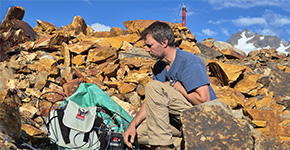
We provide comprehensive technical support at every stage of your field geophysical campaign — from logistics and operational management to data acquisition and crew supervision.
Data Acquisition
Data Acquisition
We provide comprehensive technical support at every stage of your field geophysical campaign — from logistics and operational management to data acquisition and crew supervision.
 Training
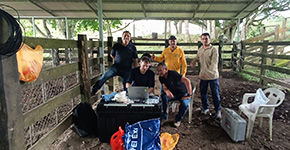
On-site or remote courses, hands-on exercises, and crew ramp-up for consistent, repeatable results.
Training
Training
On-site or remote courses, hands-on exercises, and crew ramp-up for consistent, repeatable results.
 Data Processing
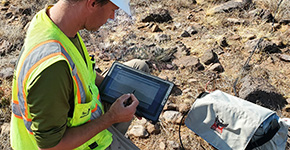
We deliver advanced field data processing and cleaning, including quality control and assessment, denoising, inversion, and preparation of geophysical maps.
Data Processing
Data Processing
We deliver advanced field data processing and cleaning, including quality control and assessment, denoising, inversion, and preparation of geophysical maps.
